Malic acid
Overview
Malic acid is a naturally occurring organic acid found abundantly in apples, cherries, pears, and many other fruits — the name derives from the Latin for apple (Malum). It contributes the characteristic sharp, fruity tartness of green apples. As a food additive (E296), it is used as an acidity regulator and flavouring in beverages, confectionery, fruit-flavoured products, and some processed foods, where it adjusts pH and enhances perceived fruitiness.
JECFA evaluated malic acid in 1973 and did not establish a numerical ADI, classifying it as not specified. Malic acid is a key intermediate in the citric acid (Krebs) cycle of human cellular energy metabolism, meaning the body handles it continuously at quantities far exceeding any food additive contribution.
Malic acid is approved universally — EU (E296), United States (GRAS), Japan, Korea, and globally. It is one of the most consumer-friendly acidulants available and is widely considered acceptable in clean-label formulations. Unlike phosphoric acid, it contributes no concern around mineral imbalance. Consumers may notice it prominently in sour confectionery and sports drinks, where its sharp flavour profile makes it preferable to citric acid for certain taste targets. There are no known adverse effects at dietary levels of exposure.
Generated from verified JECFA, EFSA, and regulatory data. All numerical values are sourced from the WHO/FAO JECFA Combined Compendium and EFSA OpenFoodTox 3.0.
Safety Assessment
| Body | Acceptable Daily Intake (ADI) | Year |
|---|---|---|
| JECFA | Not specified — no concern at typical intakes · JECFA 1973 | 1973 |
| EFSA | — | — |
ADI = the amount of a substance a person can consume every day over a lifetime without appreciable health risk. Expressed as mg per kg body weight per day. Source: WHO/FAO JECFA Combined Compendium; EFSA OpenFoodTox 3.0.
Primary Sources
Products on Looksee containing Malic acid
Shredders Chewy Sour Candy Shreds
Just Born Inc.
Red rageous chewy fruit flavored candy
Just Born Inc.
Mike and ike easter treats chewy assorted fruit flavored candy
Mike And Ike

Mike and ike berry blast
Mike And Ike
Candy
Mike And Ike
Original fruits chewy candies
Mike And Ike
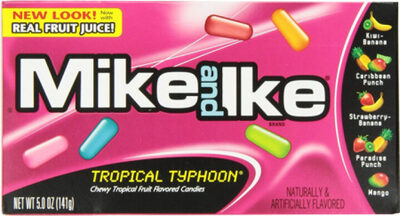
Mike and ike tropical typhoon candies
Mike and Ike
mike pue ike nega mix
Mike And Ike
Chewy assorted fruit flavored candies
Mike And Ike
Hot Tamales, Tropical Heat, Chewy Spicy Candies
Just Born Inc.
Chewy Candies
Mike And Ike
Jurassic World Chewy Fruit Candies
Just Born Inc.
Showing up to 12 products from our database. Search all products.