Titanium dioxide
Overview
Titanium dioxide (E171) is an inorganic white pigment used in food manufacturing to provide whiteness and opacity to products including chewing gum, confectionery, certain sauces, and powdered foods. Chemically it is dioxotitanium (TiO2, CAS 13463-67-7), one of the most chemically stable inorganic compounds known. Its high refractive index makes it exceptionally effective as a whitener at very low concentrations. In food, it is present as ultrafine particles, and the proportion of particles in the nanometre size range has been a central regulatory concern.
JECFA evaluated titanium dioxide in 2021 and assigned an ADI classification of "not allocated" — meaning available data were insufficient to establish a safe intake level. This designation signals that a numerical limit could not be established due to data gaps rather than demonstrated safety. EFSA reached a similar conclusion in 2021, stating it could "no longer consider titanium dioxide as safe when used as a food additive," primarily due to genotoxicity concerns that could not be excluded.
The European Union banned titanium dioxide as a food additive in August 2022 (EU Regulation 2022/63), following the 2021 EFSA scientific opinion. The ban affects all food categories in EU member states. The additive remains permitted in the United States, Japan, South Korea, and many other markets where regulatory bodies have not taken equivalent action. The EU ban represents one of the most significant food additive reversals in recent regulatory history and reflects application of the precautionary principle in response to persistent uncertainty about nanoparticle genotoxicity. Manufacturers exporting to EU markets must reformulate products containing E171.
Generated from verified JECFA, EFSA, and regulatory data. All numerical values are sourced from the WHO/FAO JECFA Combined Compendium and EFSA OpenFoodTox 3.0.
Safety Assessment
| Body | Acceptable Daily Intake (ADI) | Year |
|---|---|---|
| JECFA | Not allocated — data insufficient · JECFA 2021 | 2021 |
| EFSA | — | — |
ADI = the amount of a substance a person can consume every day over a lifetime without appreciable health risk. Expressed as mg per kg body weight per day. Source: WHO/FAO JECFA Combined Compendium; EFSA OpenFoodTox 3.0.
Regulatory Status
| Jurisdiction | Status | Notes |
|---|---|---|
| United States | Allowed; under FDA review | No ban in the US as of 2026. |
| European Union | Banned in food since August 2022 | EU Reg. 2022/63 removed E171 after EFSA 2021 genotoxicity opinion. |
| Japan | Approved | — |
| South Korea | Approved; under review | — |
| GB | FSA reviewed 2022 and retained authorisation (diverges from EU ban) | Post-Brexit divergence: GB kept E171 after the FSA opinion concluded EFSA's evidence was insufficient. |
| VN | Approved with usage limits | — |
| TH | Approved with usage limits | — |
| IN | FSSAI approved with category limits | — |
| AE | Approved (GCC/GSO standards) | — |
| CN | Approved per GB 2760 | — |
Scientific Notes
Banned as food additive in the EU (2022) due to genotoxicity uncertainty.
- •EFSA Scientific Opinion(2021)— no longer safe
- •EU Reg. 2022/63(2022)— food additive ban
Chemical Identity
- IUPAC name
- dioxotitanium
- CAS number
- 13463-67-7
- PubChem CID
- 26042
Primary Sources
Products on Looksee containing Titanium dioxide

Fat Free Natural Cheddar Cheese
Kraft

TZATZIKI CREAMY GARLIC CUCUMBER DIP
TRADER JOE'S

ULTIMATE PLANT-BASED CHICK'N NUGGETS
gardein
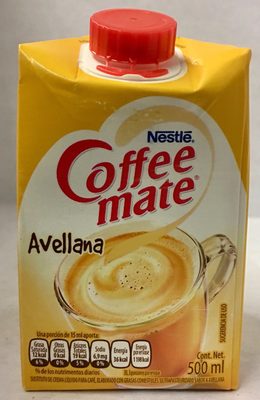
Coffee Mate Avellana
NESTLE
Sausage Pizza
Celeste
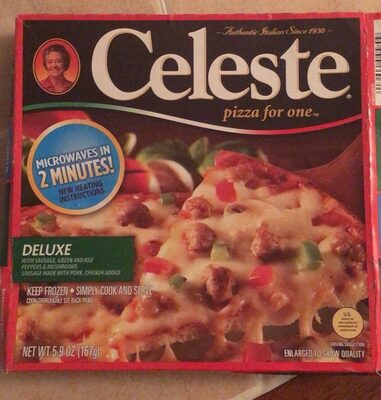
Delux Pizza
Celeste
Sparkle Gel
Wilton
Peanut Butter S'Mores Ice Cream
Food Club
Wilton, cupcake decorating kit
Wilton

Oreo Cookies Rocky Road Trip 1x10.7 Oz
Mondelez
Sprinkles
Wilton

trail mix mountain
Eatz
Showing up to 12 products from our database. Search all products.