Brand
Geisha
100% Pure Pumpkin
Bamboo Shoots Sliced
Geisha, cooked ezpeel tail-on shrimp
Geisha, diced water chestnuts
Geisha, mahi fillet
Geisha, maquereau a la sauce tomate
Geisha, swordfish steaks
Geisha, tilapia fillet
Geisha, tuna steaks
Water Chestnuts Sliced
Whole Water Chestnuts
Cooked Shrimp
Fancy smoked baby clams in cottonseed oil
Geisha, cooked shrimp
Geisha, whole baby clams
Mixed vegetable stir fry
Whole Baby Scallops
Mandarin oranges

Mandarin Oranges, Whole Segments in Light Syrup
Imperial Crab Meat
Lump Crab Meat
Geisha, bean sprouts in water
Geisha, whole baby corn
Whole Oysters In Water
Smoked Oysters
White Peaches Sliced In Syrup
Smoked Mussels

Smoked Oysters In Sunflower Oil
Fancy White Crab Meat
Geisha mackerel in hot tonafo sauce (chili)

Fancy Crab Meat With Leg Meat
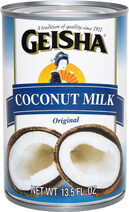
Coconut Milk, Original
Codfish Fillet
Maquereau
Perch Fillet
About Geisha on Looksee
Looksee tracks 35 products from Geisha in the catalogue. Across the 32 scored products, the average Looksee Score is 74/100 (Good).
Score breakdown: Good (13), Excellent (11), Fair (4), Poor (4). Highest-scoring: 100% Pure Pumpkin at 100/100. Lowest-scoring: Coconut Milk, Original at 23/100.
Nutri-Score grades in this catalogue: A (18), B (2), C (2), D (2), E (1).
Processing level (NOVA classification): Group 3 — Processed food (15), Group 1 — Unprocessed or minimally processed (6), Group 4 — Ultra-processed food (6).
Category: food (35).
Every Looksee Score combines three independently validated signals into one 0–100 number, where higher is always better: Nutri-Score (nutrition quality — calories, saturated fat, sugar, and salt weighed against fibre and protein, up to 40 points), NOVA classification (degree of industrial processing, from unprocessed to ultra-processed, up to 35 points), and additive risk (a risk-weighted penalty for ingredients flagged by EFSA or peer-reviewed studies, up to 25 points). If a pillar has no data for a given product, it is dropped from both the numerator and denominator so the product is never penalised for a data gap. See the full scoring methodology →