Erythritol
Overview
Erythritol is a naturally occurring sugar alcohol found in small amounts in fermented foods, wine, beer, and some fruits including pears and watermelons. Commercially, it is produced by fermenting glucose with selected yeasts. As a food additive (E968), it is used as a low-calorie sweetener in sugar-free confectionery, beverages, chewing gum, and bakery products. It provides approximately 70% of the sweetness of sugar with only about 0.2 calories per gram — roughly one-twentieth the caloric value of sucrose — because it is almost entirely absorbed in the small intestine and excreted unchanged in urine.
JECFA evaluated erythritol in 1999 and did not establish a numerical ADI, placing it in the most favourable safety category. Unlike most other sugar alcohols, erythritol is absorbed before reaching the large intestine, which means it does not cause the fermentation-related bloating, gas, and laxative effects associated with sorbitol, mannitol, and xylitol at higher doses.
Erythritol is approved in the EU (E968), the United States (GRAS), Japan, and most global markets. It is one of the most well-tolerated sugar alcohols and is widely used in diabetic-friendly and ketogenic products. A 2023 observational study reported an association between high blood erythritol levels and cardiovascular events; however, the study measured erythritol produced endogenously by the body rather than additive intake, and causality was not established. Regulatory bodies have not revised their positions as a result.
Generated from verified JECFA, EFSA, and regulatory data. All numerical values are sourced from the WHO/FAO JECFA Combined Compendium and EFSA OpenFoodTox 3.0.
Safety Assessment
| Body | Acceptable Daily Intake (ADI) | Year |
|---|---|---|
| JECFA | Not specified — no concern at typical intakes · JECFA 1999 | 1999 |
| EFSA | — | — |
ADI = the amount of a substance a person can consume every day over a lifetime without appreciable health risk. Expressed as mg per kg body weight per day. Source: WHO/FAO JECFA Combined Compendium; EFSA OpenFoodTox 3.0.
Regulatory Status
| Jurisdiction | Status | Notes |
|---|---|---|
| United States | GRAS sweetener | 2023 Nature Medicine paper linked plasma erythritol to MACE risk. |
| European Union | Approved with usage limits; EFSA reviewing 2023 signal | — |
| Japan | Approved with usage limits | — |
| South Korea | Approved (MFDS) | — |
| GB | FSA approved with usage limits | — |
| VN | Approved with usage limits | — |
| TH | Approved with usage limits | — |
| IN | FSSAI approved with category limits | — |
| AE | Approved (GCC/GSO standards) | — |
| CN | Approved per GB 2760 | — |
Primary Sources
Products on Looksee containing Erythritol

Stevia Leaf
truvia

BODYARMOR LYTE Peach Mango Sports Drink
BODYARMOR

Mixed Berry Kombucha
Nexba

Cookies & Cream Protein Bar
Quest

Monster Energy Ultra
Monster

Chocolate Peanut Butter
Quest

Chocolate Chip Cookie Dough Bar
Kirkland
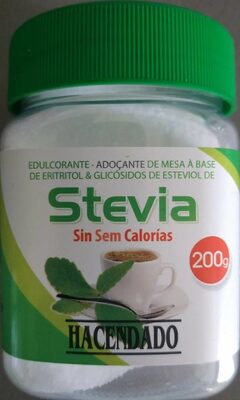
Stevia
Hacendado

Protein Bar Chocolate Chip Cookie Dough
Kirkland

Organic Protein Protein Powder
Orgain

Organic Protein Protein Powder
Orgain

Organic Protein Protein Powder
Orgain
Showing up to 12 products from our database. Search all products.